SMP on Thinning Hair: How the Density Illusion Works
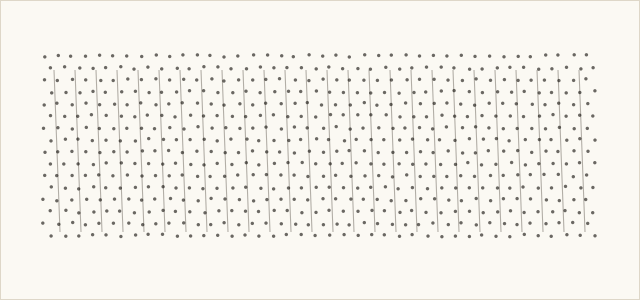
On thinning hair, scalp micropigmentation is not standing in for hair. It is removing the bright background that makes thin hair look thin. Dots of pigment go into the scalp between the hairs that are still there, the skin showing through stops being pale, and the eye reads the area as denser than it is.
That is a genuine effect and a narrow one. It depends on hair being present, on how light hits the scalp, and on nobody standing very close. Understanding those three dependencies is most of deciding whether it suits you.
Contrast, not coverage
Thinning becomes visible when scalp shows through. Hair that is finer and sparser lets light onto pale skin, and the contrast between the two is what the eye picks up long before it counts individual hairs. Attack the contrast and you change the impression without changing a single follicle.
That is the mechanism the industry itself describes. HairClub's page for its micropigmentation treatment says the procedure does not grow new hair and instead creates the illusion of fuller hair by reducing the contrast between the scalp and existing hair, naming diffuse thinning in men and women as one of the situations it suits. It is the rare piece of vendor copy that describes exactly what is happening.
It is also why the same trick works with a bottle of powder, a pair of clippers or a tattoo. All three are contrast interventions with wildly different permanence, which is the comparison laid out on what SMP costs.
How much hair you need for it to work
More than you might think, and the only published attempt to put a figure on it is narrow. A 2024 retrospective study in the Journal of Cosmetic Dermatology looked at 40 women with female pattern hair loss treated with either surgery or micropigmentation and measured density at the part line; it proposes micropigmentation where density is at or above 104.6 hairs per square centimetre and surgery at or below 96.17.
Forty patients at one centre, looking backwards — not a threshold to apply to yourself. But the direction is the useful part, and it is the opposite of the intuition many people arrive with: pigment between hairs works better the more hair is left, because it is the remaining hair that does the texturing. Where there is very little, the honest option is usually the shaved-head plate rather than a density job.
Where the illusion breaks
- Up close. A 2022 clinicopathologic paper in Skin Appendage Disorders describes what magnification shows: evenly spaced grey-to-black circular dots that appear larger than the follicles beside them. At conversational distance that is invisible. At kissing distance it is not.
- Under harsh overhead light. Thinning is worst under a ceiling light for the same reason the plate is: direct light down a parting exposes the most scalp. Pigment reduces the contrast, it does not abolish the geometry.
- When it is wet. Hair clumps when wet and lets more scalp through, and no dot field changes that.
- Over time, as the loss continues. The dots are fixed and the hair around them is not. The 2016 camouflage review in the International Journal of Women's Dermatology notes that touch-ups become necessary partly because hair loss progresses.
Density jobs and shaved plates are different skills
Placing dots between existing hairs is not the same work as building a full field on a clipped scalp. The density job has to match tone and spacing to hair that is already there, in an area that will be seen through moving hair; the shaved plate is a whole surface with its own hairline design.
The technical variables a 2017 paper in the Journal of Cutaneous and Aesthetic Surgery lists — needle angle, depth, contact time, rotor speed, scalp resistance, pigment colour, ink viscosity, needle thickness and dot pattern — are the same list either way, but the judgement is not. Ask directly how much density work an artist does, and ask to see healed examples of it rather than of shaved plates. The rest of that conversation is in how to vet an SMP artist.
Try the reversible version of the same trick first
Everything a density plate does for the look of a thinning scalp, a pigmented powder does for an evening. The mechanism is the same — darken the scalp so it stops showing through — and a 2016 review describes exactly that: camouflage lotions and sprays applied to limit the colour contrast between existing hair and scalp, water resistant but removable with shampoo.
The catch with the reversible version is that it is daily, and that water can disturb it. The catch with the permanent version is that it is permanent. Spending a month with the bottle is a cheap way to find out whether lowering the contrast is actually the thing that bothers you, before committing to a field of dots — and the fibre products publish their prices, which the studios do not. They are compared in hair fibres and concealers.
What it does not do, said once more
It does not slow, stop or reverse the thinning. It changes how the thinning looks, and the underlying process carries on at whatever pace it was going to. That is not a knock on the technique — it is what camouflage means — but it does mean a cosmetic decision should not be doing the work a medical one ought to.
Diffuse thinning in particular has causes worth ruling out before anything gets tattooed over it: thyroid disease, iron deficiency, telogen effluvium, medication effects. A doctor or board-certified dermatologist can tell those apart. That appointment pays this site nothing and it is still the first thing on this page.
The full account of the procedure, the law on who may perform it and what removal involves is in the scalp micropigmentation guide.
Questions about SMP on thinning hair
Does SMP work on diffuse thinning or only on bald areas?
Will SMP make thin hair look thicker in photographs?
Can I use hair fibres over SMP?
How close can someone get before SMP looks like dots?
The long version of all of this sits on what scalp micropigmentation actually is, and what it costs is picked apart on the scalp micropigmentation cost page. Neither page names a studio, and neither is a substitute for a doctor looking at your scalp.
Read next
SMP Aftercare: What the Sources Say, and Who to Ask
Your artist's written instructions are the authority, not a website. What the regulator and the published literature do say about freshly tattooed skin, sun, infection and when something has gone wrong.
What HairClub's Free Consultation Actually Involves
A measurement, a report and a sales conversation — plus a sentence on HairClub's own page that tells you what the appointment is not. What to bring and what to get in writing.